
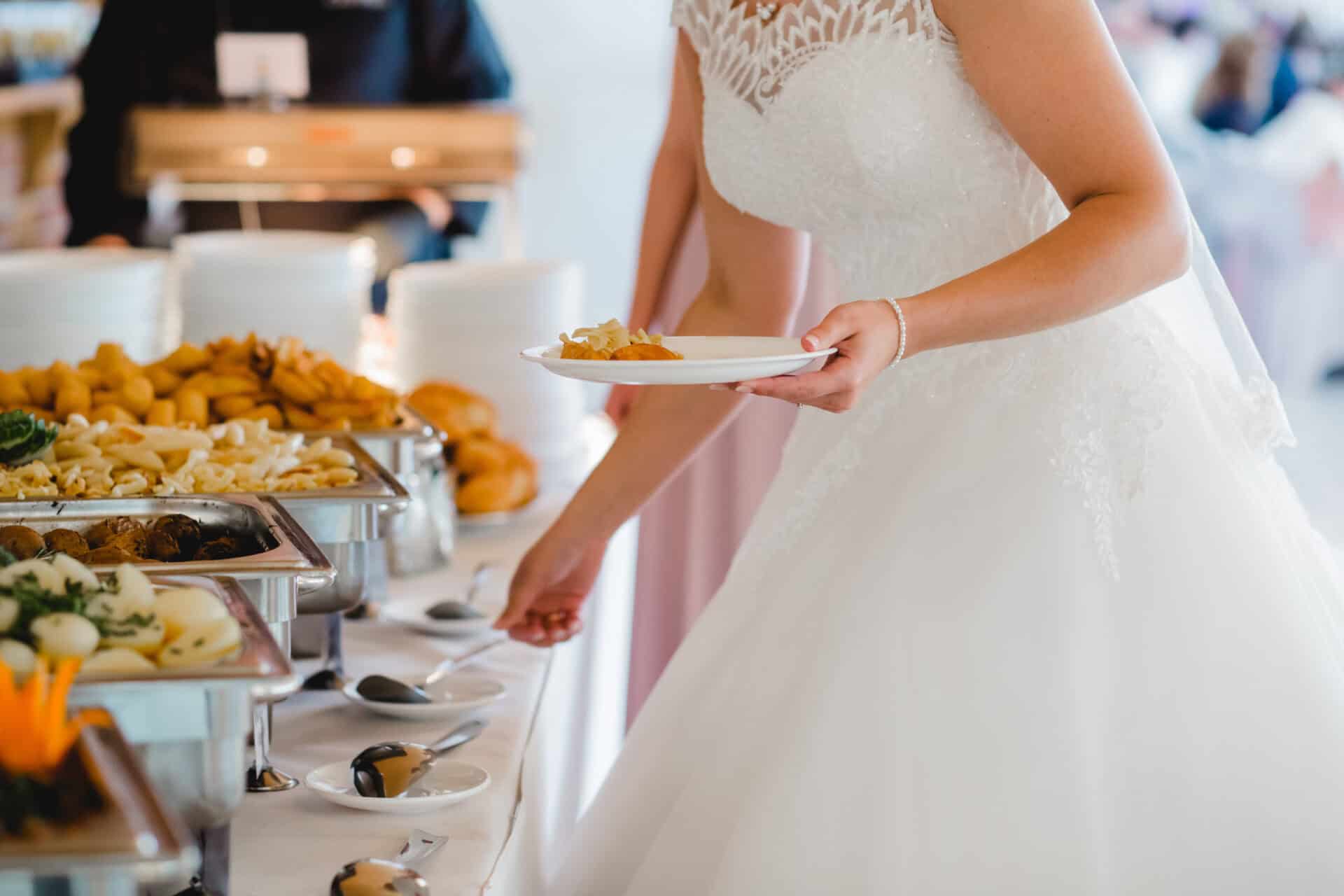
A wedding buffet can give guests flexibility and create a relaxed atmosphere, but a successful service needs more thought than choosing a selection of dishes. Guest numbers, the room layout, the time available and the wider running order all affect how well it works. Good wedding buffet ideas consider not only what appears on the table, but how guests reach it and how the service fits around the day. Careful wedding buffet menu planning helps couples make sensible decisions about these details early, without adding unnecessary pressure.
How Should a Wedding Buffet Fit into the Day?
Start by deciding what role the buffet will play. It may be the main meal after the ceremony, a relaxed option between photographs and speeches, or part of a longer celebration where food is also planned later in the evening. Each arrangement creates different expectations around quantity, service time and how long guests will spend eating.
Look at the full timetable before settling the catering details. Consider when the ceremony finishes, whether guests will have refreshments beforehand, how long photographs may take and when speeches are planned. Share the proposed schedule with your caterer, including any evening food, so the different parts of the day can be considered together.
Choosing a Buffet Arrangement That Suits the Venue and Guest List
The best buffet arrangement is one that works with the space available and the number of guests. Food might be presented along one table, divided between several serving points or arranged so people can approach from more than one direction. The aim is to make the food easy to reach without crowding the room.
Ask the venue what furniture can be moved, where serving tables can go and whether there are restrictions on access. A narrow room with one entrance may need a different setup from a larger space. A small gathering may be comfortable with a simple arrangement, while a larger reception could benefit from more than one point of access.
Planning the Buffet Layout Around Guest Movement
Think about the journey guests make from their seats to the buffet and back again. If everyone approaches from one end of a long table, a queue can build quickly. Where the room allows, separate serving points or access from both sides may spread people more evenly. Plates, cutlery and drinks should be positioned so guests are not crossing the same space repeatedly.
Avoid placing the buffet beside a doorway, narrow corridor or busy service route. Consider older guests, children and anyone who may find crowded spaces difficult to navigate. A clear route, enough room to turn with a plate and an uncluttered serving area can make the experience more comfortable for everyone.
How Should You Estimate Food Quantities?
There is no single formula for working out wedding buffet quantities per person. The amount required depends on the number of guests, the time of day, how long the food will be available and whether the buffet is the main meal or one of several food moments. Start with the latest guest list and separate confirmed numbers from outstanding replies.
Consider what guests may have eaten earlier and whether evening food is planned. Avoid relying on a generic online portion calculator without checking its assumptions; different menus and service styles can make those figures misleading. Your caterer can help work through likely requirements using the actual menu and timetable. Ask when final numbers are needed and how late changes can be handled.
Balancing Hot and Cold Food During Service
A buffet can include hot dishes, cold options or a mixture of both. The right balance depends on the celebration, venue and experience you want guests to have. Discuss how each dish will be presented and whether the venue has the facilities needed for the proposed arrangement. Hot food and chilled items have different handling and service requirements.
It is usually better to choose a coherent selection than to offer so many dishes that the table becomes crowded. Ask who will oversee replenishment and how dishes will be replaced as they run low. Think about how the options work together, whether guests can identify what they are choosing and whether the serving equipment allows food to be presented neatly throughout the service.
Making Dietary Information Clear for Guests
Dietary requirements should be discussed before the wedding rather than left until guests reach the buffet. Invite guests to share relevant requirements through the RSVP process and pass the information to the person coordinating the catering. Distinguish between preferences, intolerances and allergies, as they may need different arrangements.
Clear information helps guests make informed choices. Official guidance says allergen information for buffet food should identify allergens for each food item separately. The government’s food allergen guidance explains the requirements for food businesses. Confirm arrangements with the caterer, including how information will be kept accurate if ingredients or recipes change.
Keeping Queues Moving at a Wedding Buffet
Queue length is affected by guest numbers, serving points, the room layout and how much assistance is needed. Consider these factors when agreeing the format rather than trying to solve them once the room is full. Keep plates and cutlery easy to find, avoid placing popular items where they block access to everything else and leave enough room for guests to move away from the table.
The running order can help too. If speeches or announcements are planned, discuss whether guests should approach the buffet in stages or whether service should happen within a particular window. The best arrangement depends on the venue and reception, but a little coordination can prevent unnecessary waiting.
Coordinating Buffet Service with Speeches and Key Moments
The meal is only one part of the wedding day, so the catering schedule should work with the other arrangements. Photographs may take longer than expected, speeches can move and guests may need time to settle into a room. If the buffet is ready before everyone is available, food may be waiting while key members of the wedding party are elsewhere.
Share the planned order of events with the venue and caterer. Identify when the room will be ready, when guests are expected and when speeches are likely to happen. Leave some flexibility in the timetable and agree who will communicate changes. A realistic plan can absorb small delays without making the food service feel rushed.
Planning the Transition to Evening Food
If the celebration continues into the evening, consider how the later food service relates to the main buffet. Couples looking for wedding evening food ideas should think about the timing and likely appetite of their guests. Guests may have eaten at different times, and some may leave before the evening gathering begins. The aim is to plan a sensible transition rather than automatically repeating the main meal in a smaller format.
Think about when the main service will finish, how long the gap will be and what else is happening. Dancing, entertainment and room changes can affect when guests are ready to eat again. Tell your caterer the expected timing and likely attendance. The food choices, quantities and service windows should complement one another, without making the evening offering more elaborate than the occasion needs.
What Should You Confirm with Your Caterer Before the Wedding?
Bring the practical details together in one clear brief. Confirm the latest guest numbers, expected service time, the buffet’s role in the timetable and whether evening food is planned. Share the venue layout and check that the serving arrangement is possible in the space available.
Also confirm who is responsible for tables, serving equipment, drinks, clearing and any venue-specific requirements. Ask how dietary information will be recorded and made available, and agree how changes to guest numbers or timings should be communicated. Keep the details together so that you are not relying on several separate messages as the wedding approaches.
If you are still weighing up the arrangements, it may help to talk through the guest numbers, venue and timetable together. You can find out more about Hassle Free Weekends and its wedding catering services before deciding whether you would like to discuss your plans.